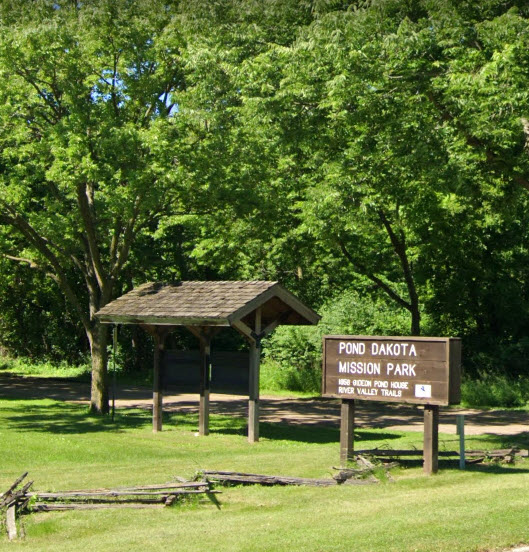



The Dakota Language Camp returned to Pond-Dakota Mission Park this summer. For 3 days in late June, about 30 participants met on the bluff above the Minnesota River Valley to work on a language that was shaped by that same landscape. Most of the kids and adults weren't Dakota, but the group included some enrolled tribal members and some teachers. Organizers said the camp is meant as an introduction to the language and a look at how a language can shape the way its speakers see the world.
The city and the University of Minnesota Dakota Language Program have held the camp almost every summer since 2008. It took a break during the COVID-19 pandemic and again in 2025, the year coordinator Neil McKay's wife, Monica, died. McKay goes by the Dakota name Cantemaza and teaches Dakota at the U. He leads the camp with instructor Eileen Bass. Mark Morrison of Bloomington Parks and Recreation started the program in the first place.
Most of the teaching happens through games. Small groups at picnic tables played a version of "Guess Who" with Dakota clothing words and a matching game called "What Eats What" for animal words. Instructors also led walks along the bluff and taught the Dakota names of the trees as campers passed them. "The language is like an interpretive guide for the land, and the land's the interpretive guide for the language, because it was created here, so people learn to see it in that way," Bass said.
McKay is upfront that fluency takes years. "I did not start becoming conversational till I was 25. Anybody can become fluent. It's just you have to work at it," he told participants. Every instructor at the camp learned Dakota as a second language. Sheyenne Tereshko, an enrolled tribal member, drove in from Wisconsin and brought her children. She said online lessons can't match hearing the nasal and throat sounds from someone in person. "I'm so happy that we had the opportunity to learn even a little bit," she said.
The location matters to the story. Brothers Gideon and Samuel Pond came from Connecticut in 1834 to work as missionaries among the Dakota, and they created an alphabet for the Dakota language. Gideon's 1856 brick house still stands in the park, at 401 East 104th Street. The house is listed on the National Register of Historic Places, and the city bought the property in 1975. Work on an Indigenous Plant Arboretum began on the 18.3-acre site in 2024. The Pond House is open Saturdays from 1 to 4 p.m., and admission is free.
Kids and adults can both sign up. That makes the camp one of the few places in the metro where you can learn Dakota while standing in the landscape it was built to describe.