
Constitutional Amendment 1: School funding
TLDR: Shall the Minnesota Constitution be amended to increase the funding going to all school districts from the permanent school fund, which is a fund that supports school districts without raising individual income or property taxes, effective July 1, 2027?
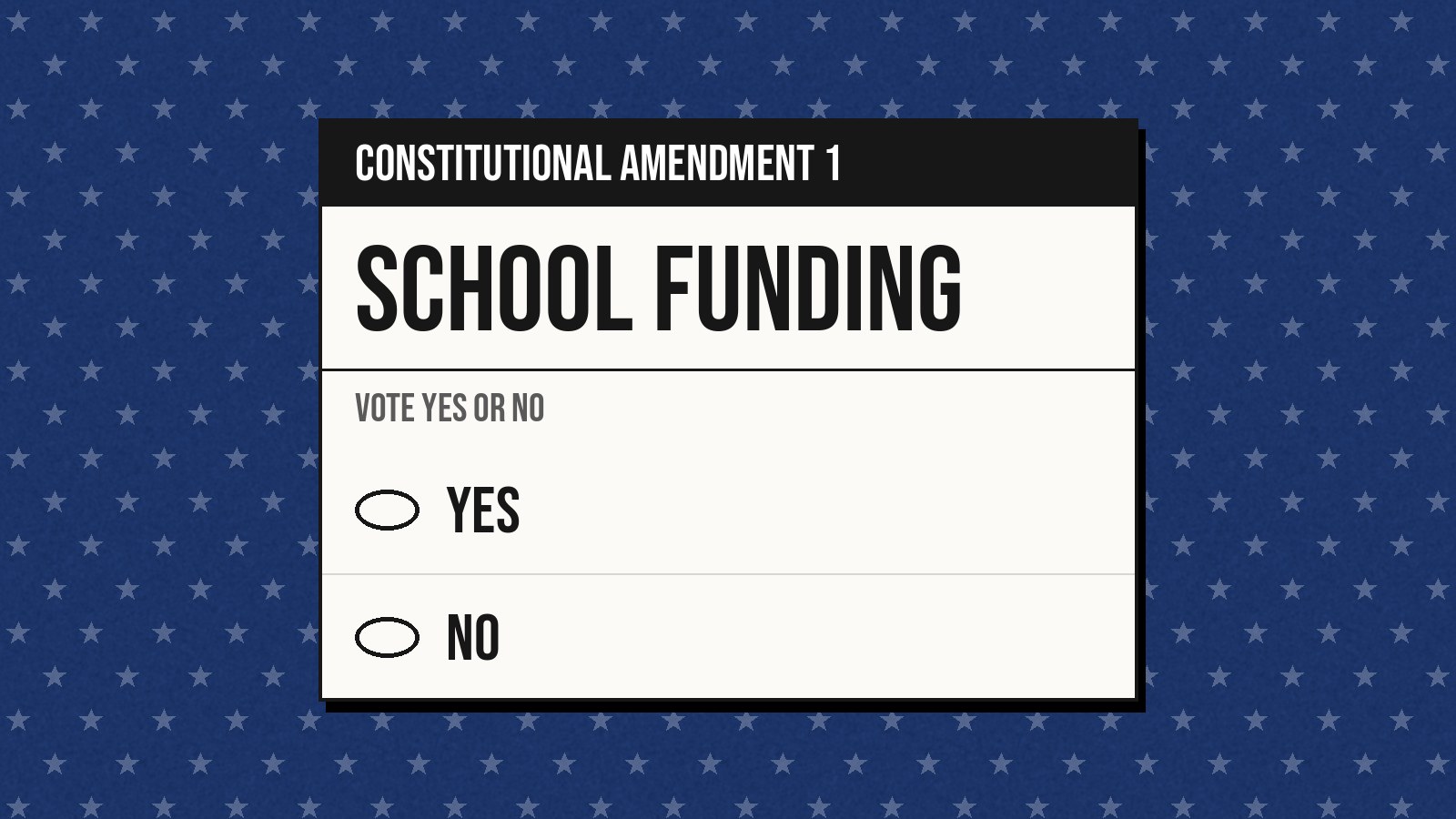
The question on your ballot
Shall the Minnesota Constitution be amended to increase the funding going to all school districts from the permanent school fund, which is a fund that supports school districts without raising individual income or property taxes, effective July 1, 2027?
A yes vote changes the constitution so the permanent school fund pays out a set share of its value each year (4.5% of its average value over the previous three years, under a companion law), which would send more money to every public school district and charter school starting July 1, 2027.
A no vote keeps the current rules, under which school districts receive only the fund's investment income (interest and dividends), currently about 2% to 2.5% of the fund a year.
Skipping it counts as a no. A constitutional amendment passes only if a majority of everyone who votes in the election votes yes. The constitution says an amendment is ratified "if a majority of all the electors voting at the election vote to ratify." A voter who leaves the question blank therefore counts the same as a no vote. revisor.mn.gov
How it works
When Minnesota became a state in 1858, the federal government granted it land to support public schools; about 2.5 million acres of these school trust lands remain. Money from timber sales, mining, leases and land sales on those lands goes into the permanent school fund, which is invested and was worth about $2.3 billion in 2026. Today, only the fund's interest and dividends, about 2% to 2.5% of its value, are paid out to schools twice a year based on enrollment. The amendment would require the fund to be managed to preserve its buying power over time while making yearly payouts, allow reasonable costs of managing the fund and trust lands to be paid from it, and leave the payout rate to state law. A law passed with it sets the payout at 4.5% of the fund's average value over the previous three fiscal years, starting with aid for the 2027–28 school year.
What it means for Bloomington schools
Around $300,000 in additional annual funding for Bloomington Public Schools (ISD 271) bloomington.k12.mn.us This is the district's own estimate, posted Sept. 9, 2026. The district's page does not show how the figure was calculated.
The case for and against
- Sen. Mary Kunesh (DFL-New Brighton), Senate author: Says it "does provide much-needed funding for schools" and, though "a small drop in the bucket" compared with other education funding, "every single bit helps our students." postbulletin.com
- Rep. Spencer Igo (R-Wabana Township), House author: Says the amendment increases school funding without new costs to taxpayers: "It's going to cost the taxpayers of Minnesota $0." reportformn.umn.edu
- Minnesota School Boards Association, Association of Metropolitan School Districts, Minnesota Association of School Administrators and Minnesota Rural Education Association (mnPSFamendment.org coalition): Say the fund has grown from about $675 million in 2010 to more than $2.3 billion, that every public school district, charter school and tribal school gets money from it, and that the change does not raise any tax. mnpsfamendment.org
- Education Minnesota (teachers union): Urges a yes vote: "more money for classrooms, no cost to taxpayers." Says the amendment won't close the special education funding gap but will create "a modest, dependable increase in school funding." educationminnesota.org
- Sen. Zach Duckworth (R-Lakeville): Said he wanted more safeguards and warned that if the amendment passes, the fund "is ultimately going to be doomed and not see the sort of financial health it has up to this date." postbulletin.com
- Sen. Robert Farnsworth (R-Hibbing), conference committee member who raised a concern during negotiations (not necessarily an opponent; his final vote is not confirmed here): Wanted a two-thirds legislative vote to be required for any future change to the payout rate, so one party alone could not change it: "I think we need to make sure that this doesn't turn into something that is used politically." The final version does not include that requirement. house.mn.gov