

The Nine Mile Creek Corridor Renewal Project has moved past the arguing stage and into construction. The city said Moir/Central Park closed completely on Sept. 7, 2026, trail access points included, and will stay closed until major work wraps up in fall 2027. In September and October, crews are taking out the existing shelter buildings and park amenities at Moir Park. A new shelter building goes in during 2027.
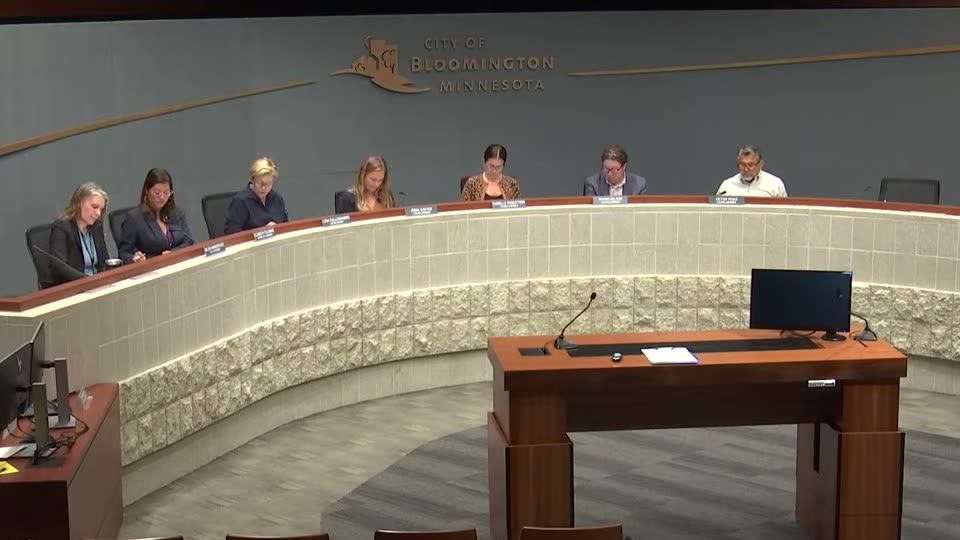
The City Council cleared the way on Aug. 3. On a late-added agenda item, members voted 5-1 to deny a resident petition for a new Environmental Assessment Worksheet. Councilmember Victor Rivas cast the only no vote, and Councilmember Jenna Carter was absent. The petitioners argued that the project could cause significant environmental effects the first review didn't adequately assess.
 City of Bloomington@CityofBloomingtonMN
On a late-added agenda item, Council voted 5-1 (Councilmember Rivas opposed) to deny a resident petition seeking a new Environmental Assessment Worksheet for the Nine Mile Creek Corridor Renewal Project, reaffirming the original 2025 EAW and negative declaration.08/03
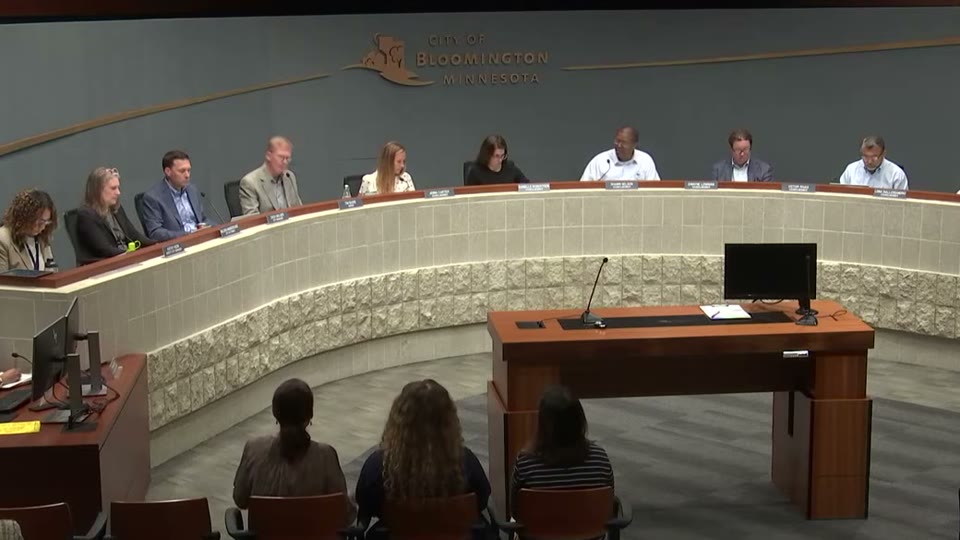
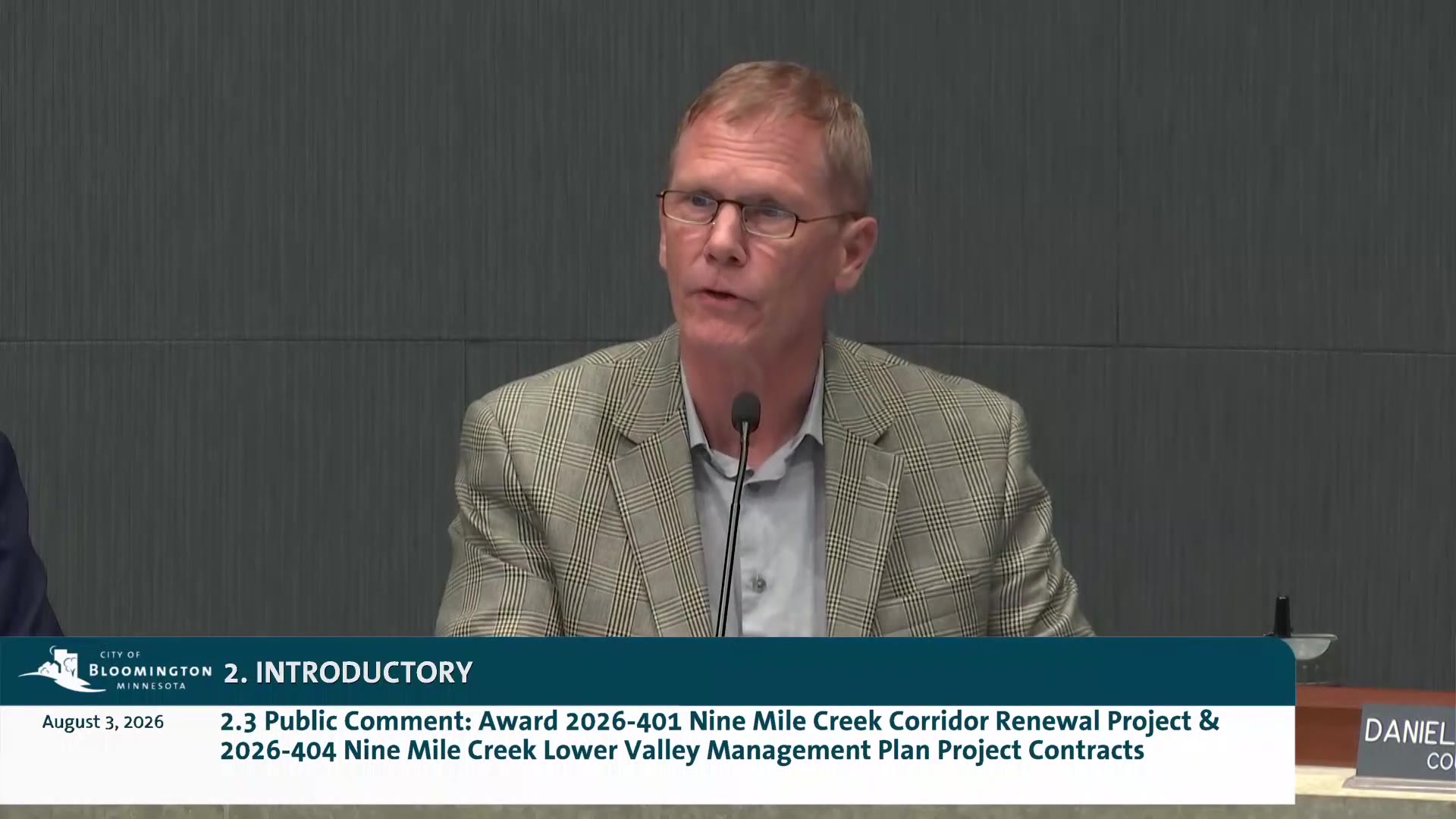
Before either vote, roughly 30 residents spent about 2 hours at the podium, and they were split. Opponents said the city is effectively clear-cutting about 40 acres of mature woodland. Supporters said restoring oak savanna brings long-term ecological gains. Staff then responded directly to the 'clear-cut' and shade-loss criticism and laid out a long-term maintenance plan.
Bloomington City Councilyoutube.com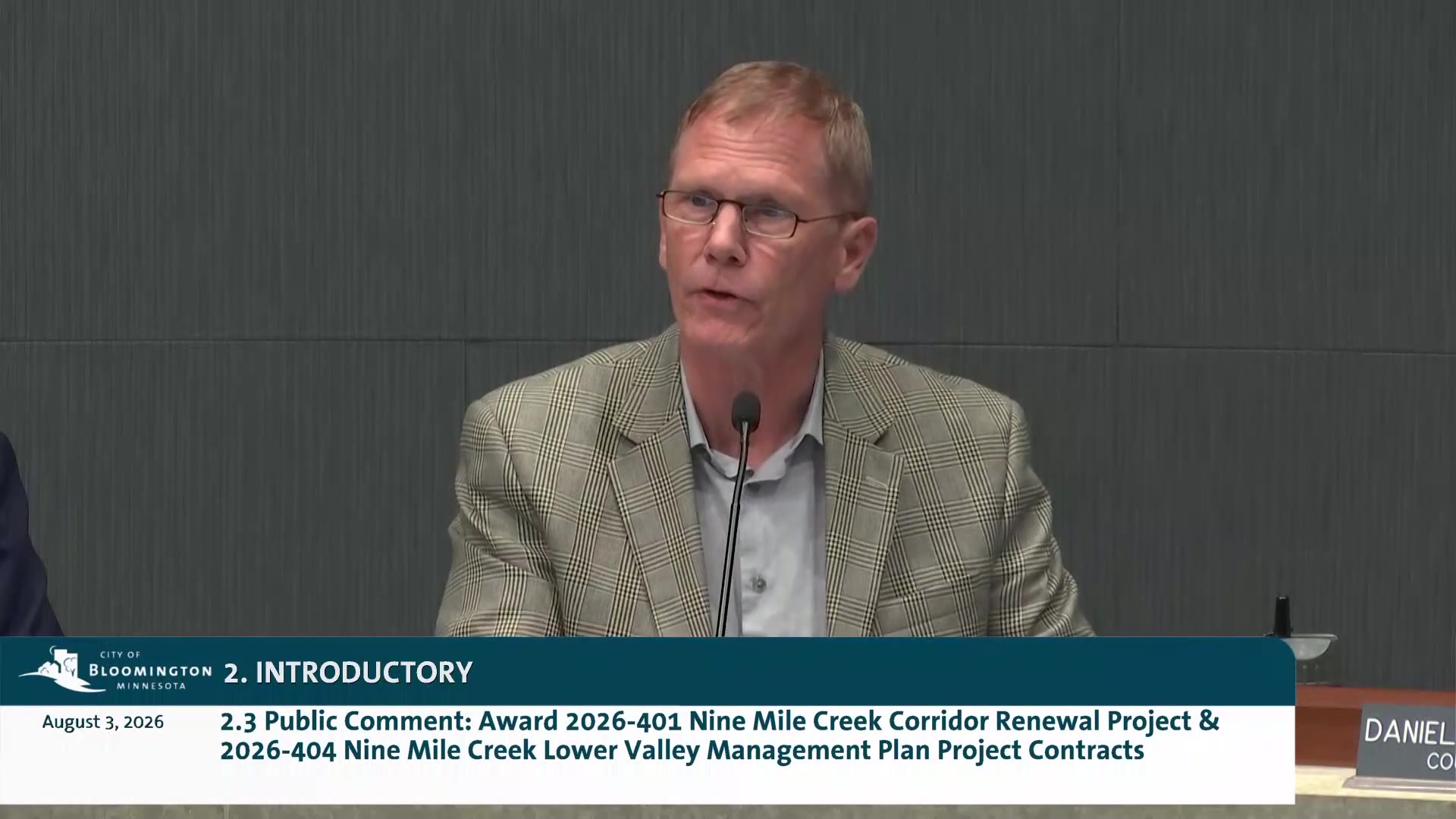
The council then approved 2 contracts, also 5-1 with Rivas opposed. Veit & Company received $11.7 million plus a $1.1 million contingency allowance, for $12.8 million in total. Resource Environmental Solutions received $4.6 million. 'This is not a minor side effect,' Rivas said of the canopy loss. Councilmember Danielle Robertson said backing the contracts 'saves us time and money.' Mayor Tim Busse acknowledged the city could have communicated better: 'That's on us, and we could do a better job next time.'
City of Bloomington@CityofBloomingtonMNRoughly 30 residents spoke for two hours on the Nine Mile Creek restoration; supporters cited ecological benefits of oak savanna restoration and endorsed the contract awards, while opponents argued the city was clear-cutting ~40 acres of mature woodland, that voters were misled by the 'renewal' ballot language, and that public engagement on the savanna conversion was inadequate.08/03
Residents were fighting over the trees long before August. The roughly $20 million project is paid for with the voter-approved local sales tax and targets erosion and invasive species along the creek. The city said about 80 to 90 trees and 5 acres were cleared in late winter and early spring. All of that cutting had to be finished by April 15, 2026, to protect the endangered long-eared bat. The city said native grasses and flowers will be planted to control erosion, and some of the felled trees will be reused to stabilize streambanks.
The corridor runs from Moir Park to the Minnesota River at the city's southern border. The oak savanna restoration covers about 40 of its 259 acres. Plans also include stream restoration, a boardwalk, bridge repairs, trail upgrades, a playground, restrooms and ADA improvements. Smaller pieces started earlier: the city held a groundbreaking at Moir Park on May 5 and finished storm sewer work at Harrison Park by June 25. Once construction ends, the contractors will keep managing the restored landscape through late 2031. The city posts updates on its project page.
From the meeting: City Council Meeting, August 3, 2026.