Deputy Chief Damon Bitney presented options for the city's aging animal shelter, which is slated for demolition in 2028. Council members reached consensus favoring a modernized, possibly regional facility (rejecting a service-reduction option), funded through cost-sharing with partner cities (Richfield, Eden Prairie, airport), charitable gambling revenue, grants, and volunteers; several members also asked staff to explore veterinary-service partnerships. No formal vote was taken (study session); staff will return with a refined plan.
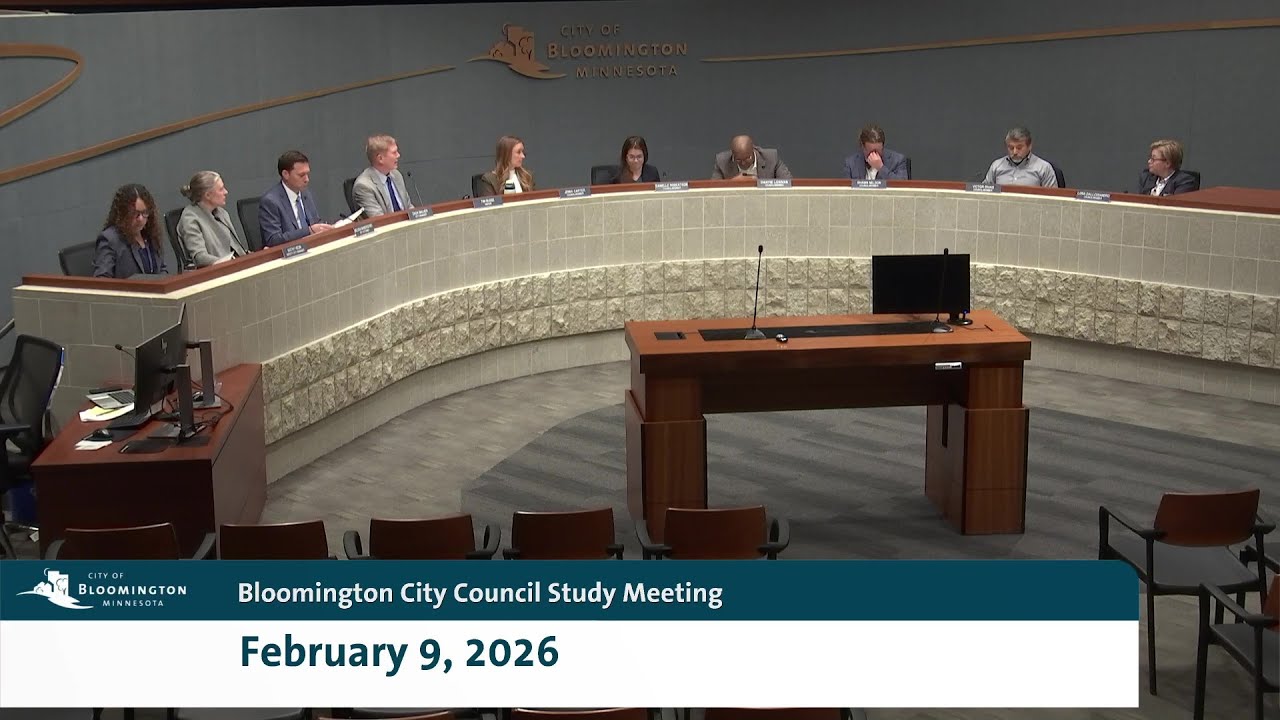
Engineering staff outlined the cost of establishing federal quiet zones at Bloomington's 26 rail crossings — a $60,000–$85,000 study plus an estimated $10.4 million in potential crossing upgrades. Council members were split, with some favoring a narrower study of just the CPKC line's 4-5 crossings and others questioning whether the expense was justified given the city has no authority over train schedules. Council directed staff to gather quiet-zone studies from Edina and St. Louis Park and solicit resident input via the Let's Talk Bloomington platform before deciding further; the 84th Street safety study remains the funding priority for 2026.
Chief Hodges told council that Bloomington police do not enforce federal immigration law, share databases with ICE, or assist with immigration arrests, despite viral claims and fake websites suggesting otherwise. He said the Jan. 2026 incident at 88th and Irving involved Homeland Security Investigations on an unrelated federal case, not immigration enforcement, and warned that fear of police is driving reports of domestic violence and trafficking underground. Council members expressed unanimous support for the department and its officers.
Following a Feb. 2 listening session with 22 speakers, staff reported declining to pursue council-suggested measures to revoke liquor licenses, cancel contracts with ICE-linked entities, or ban city property use for immigration enforcement, citing legal liability and enforceability concerns. Staff also said a gubernatorial eviction moratorium is unlikely to be pursued but floated a possible local ordinance extending the pre-eviction notice period from 14 to 30 days. New mental-health, translation, and "know your rights" resources have been added to the city's website in response to community requests.
