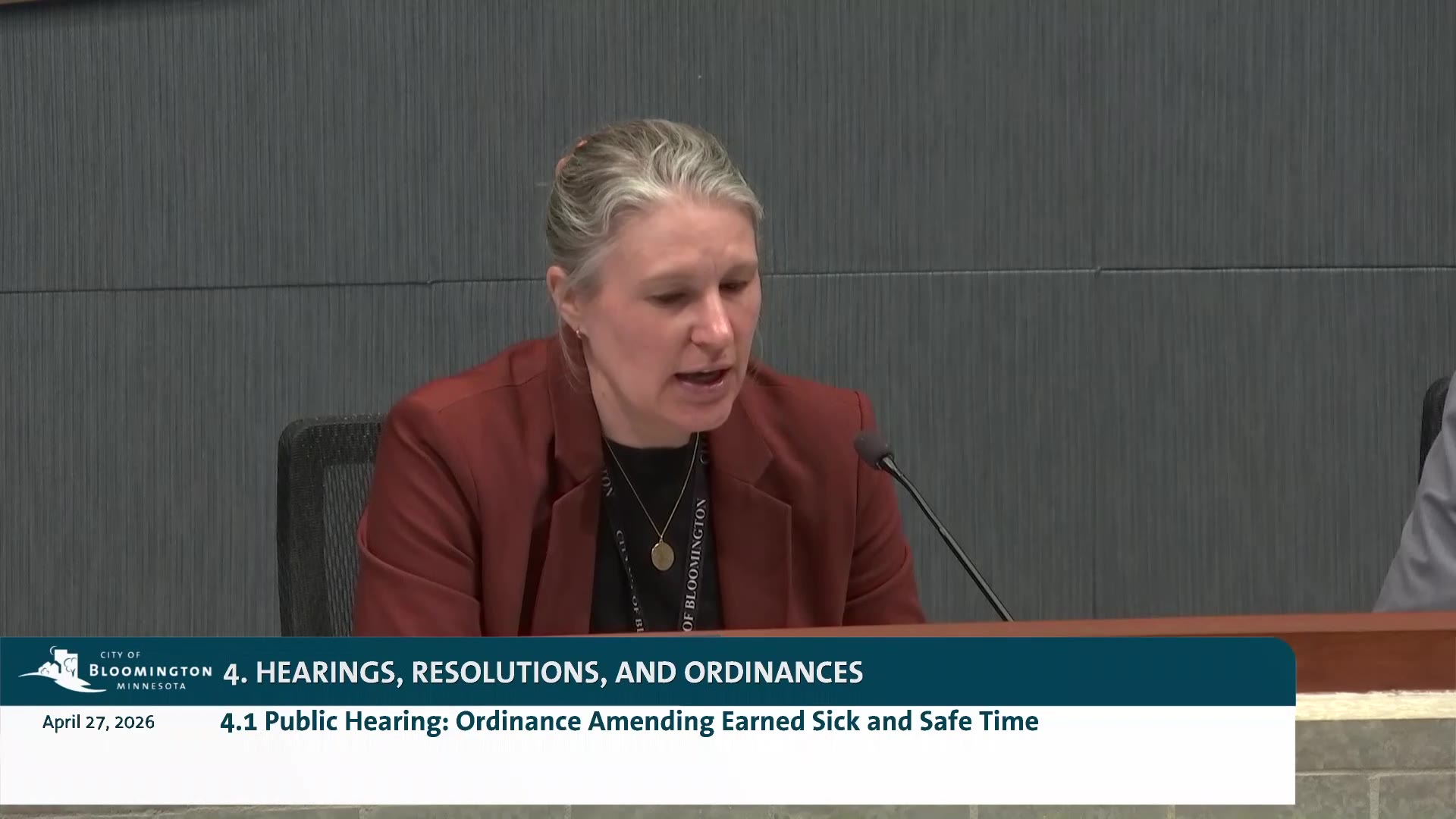
Council voted 7-0 to fully repeal Bloomington's local earned sick and safe time (ESST) ordinance, first adopted in 2022, since Minnesota's statewide law now covers the same ground and the overlap was creating confusion and duplicate compliance burdens for employers. Council Member D'Alessandro pushed back on a full deletion, worried about losing protections if state law weakens later, but voted yes after staff said a new ordinance could be re-adopted if needed. Bloomington becomes the second city, after Duluth, to repeal its local ESST law.
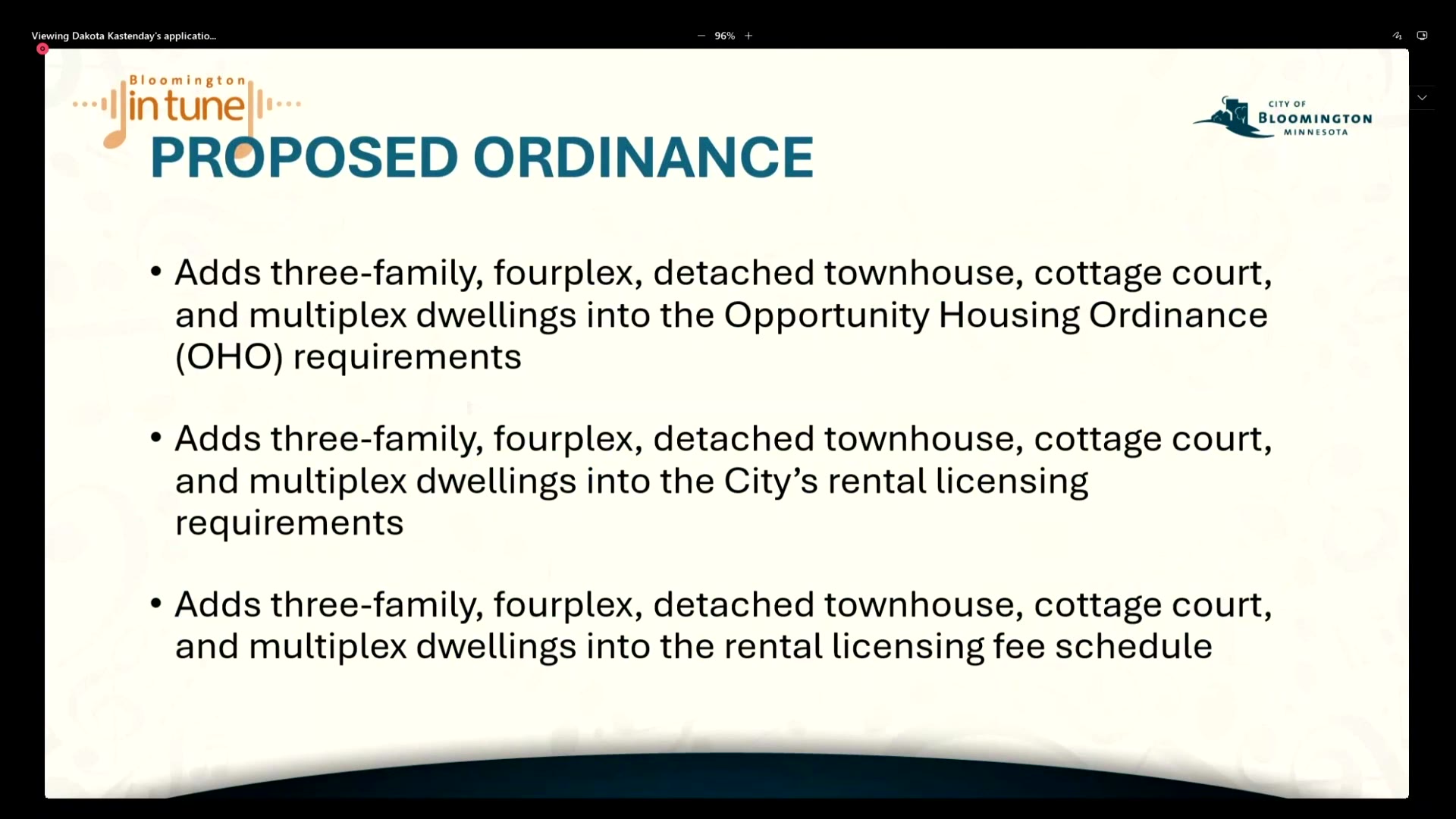
Council voted 7-0 to adopt a follow-up ordinance folding the five new housing types approved in March (three-family dwellings, fourplexes, detached townhouses, multiplexes, cottage courts) into the city's Opportunity Housing Ordinance (affordability requirements for developments of 20+ units) and rental licensing rules. A resident asked whether a neighbor could convert a single-family home to a triplex without his consent; staff agreed to explain zoning impacts to him separately after the meeting. Council members Nelson and D'Alessandro asked staff to explore incentives favoring owner-occupied units over rentals and to add condo/HOA-friendly policy options as a future agenda item, and to consider adding local condo-development support to the city's state legislative priorities.
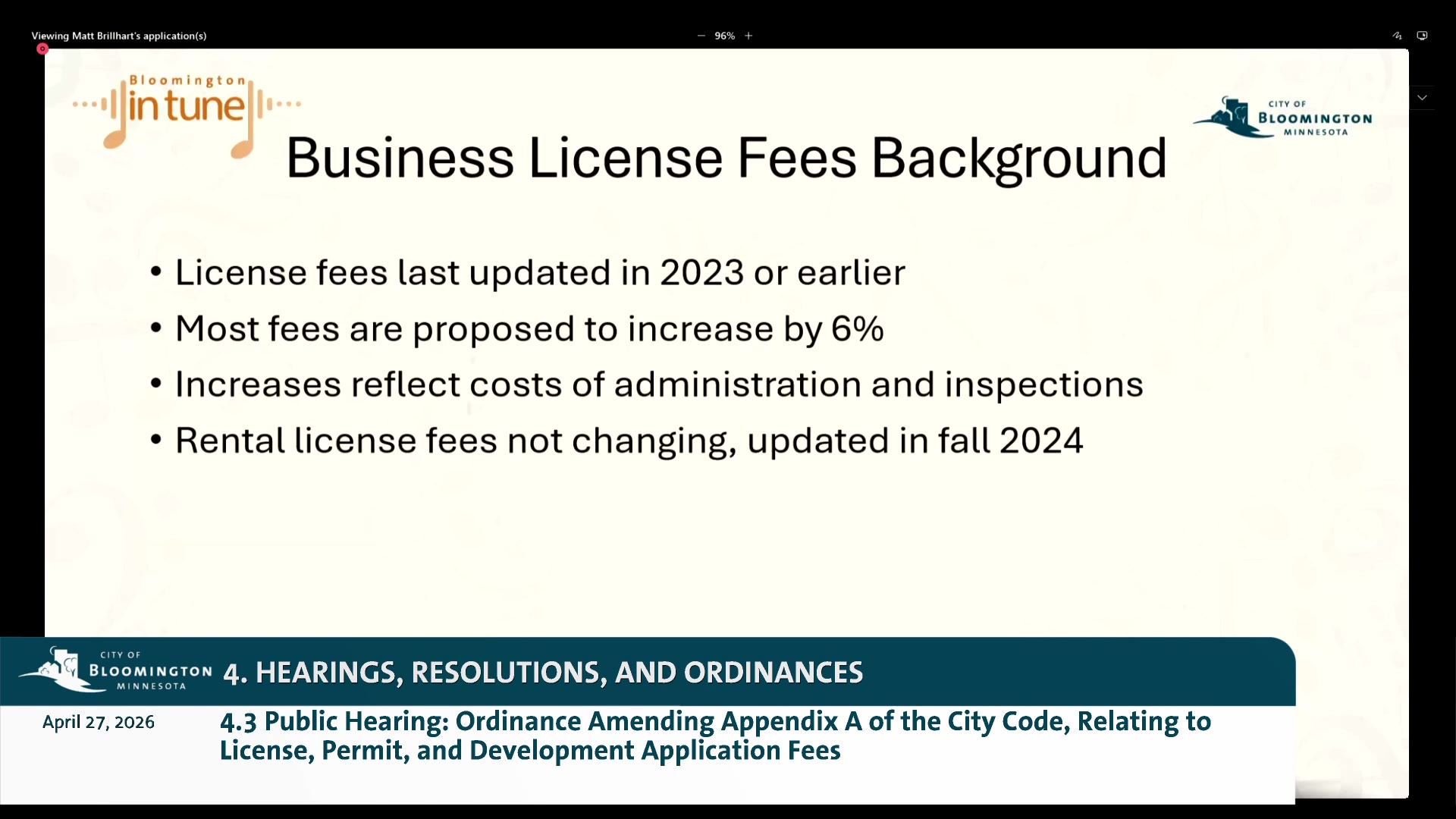
Council voted 7-0 to adopt fee-schedule increases across most business licenses (~6% general increase) plus much larger jumps for off-sale liquor ($200→$380), tobacco sales ($180→$350), and gas station licenses ($57→$300) to bring Bloomington in line with peer-city averages; building permit and planning/zoning fees were also updated for the first time since 2017 and 2023 respectively. Council members stressed the fees only recover staff/administrative costs, not revenue-generating, and directed staff to review fees on a regular 2-year cycle going forward rather than letting them lapse for up to nine years.
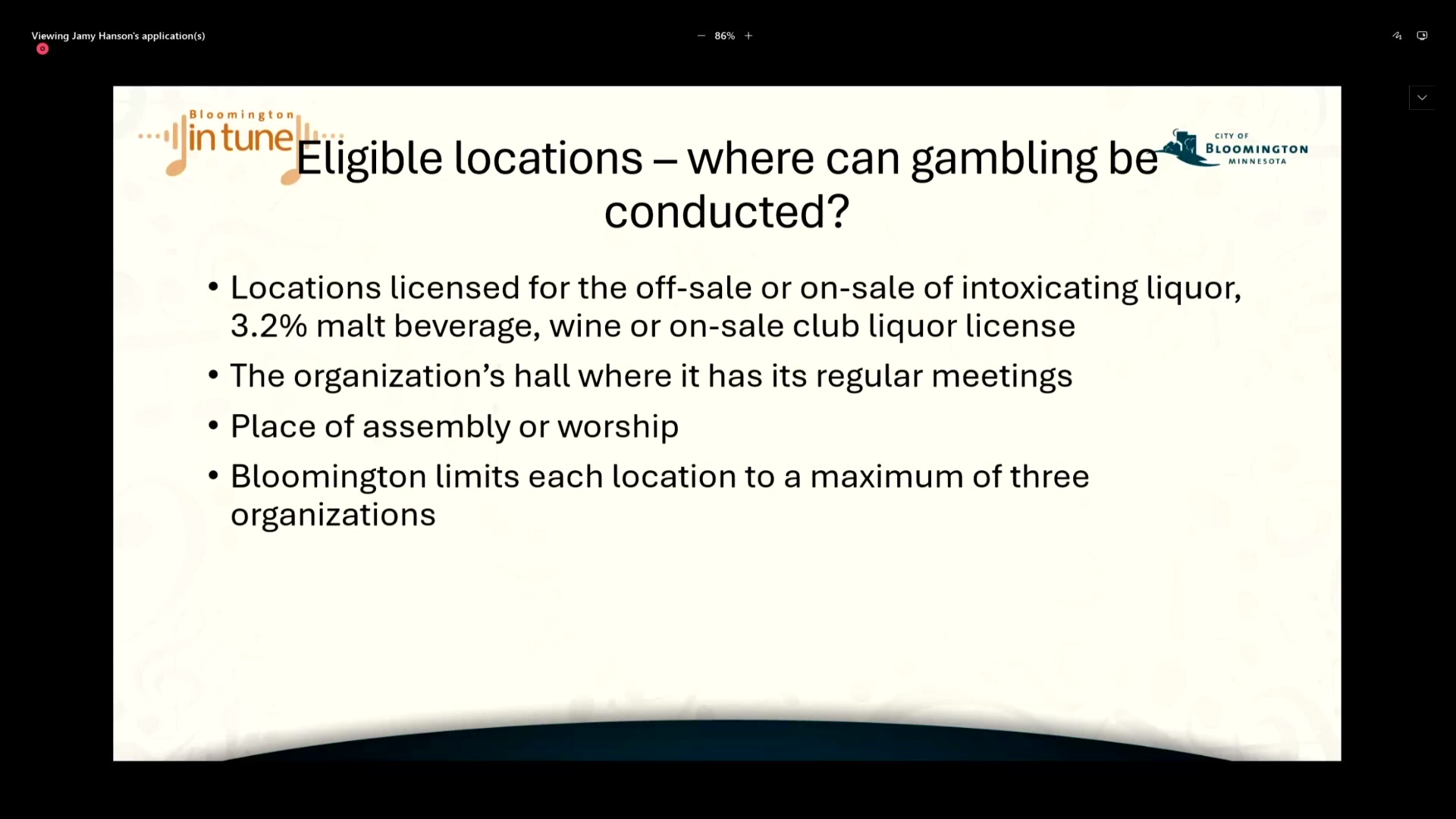
Staff presented options for charitable gambling regulation, including a proposed 10% city-administered fund on gambling organizations' net profits (about $195,000/year) earmarked for the city's animal shelter, plus tighter reporting requirements and a process to revoke non-compliant organizations' approval. Several council members (D'Alessandro, Lomen, Nelson) supported tighter reporting and cost-recovery fees but were skeptical of the 10% fund, preferring to fund the animal shelter through the normal budget process or through voluntary contributions; D'Alessandro and Robertson also floated directing funds toward gambling-addiction education instead. No formal vote was taken; council agreed to continue the discussion and bring the proposal back with options via a public hearing.
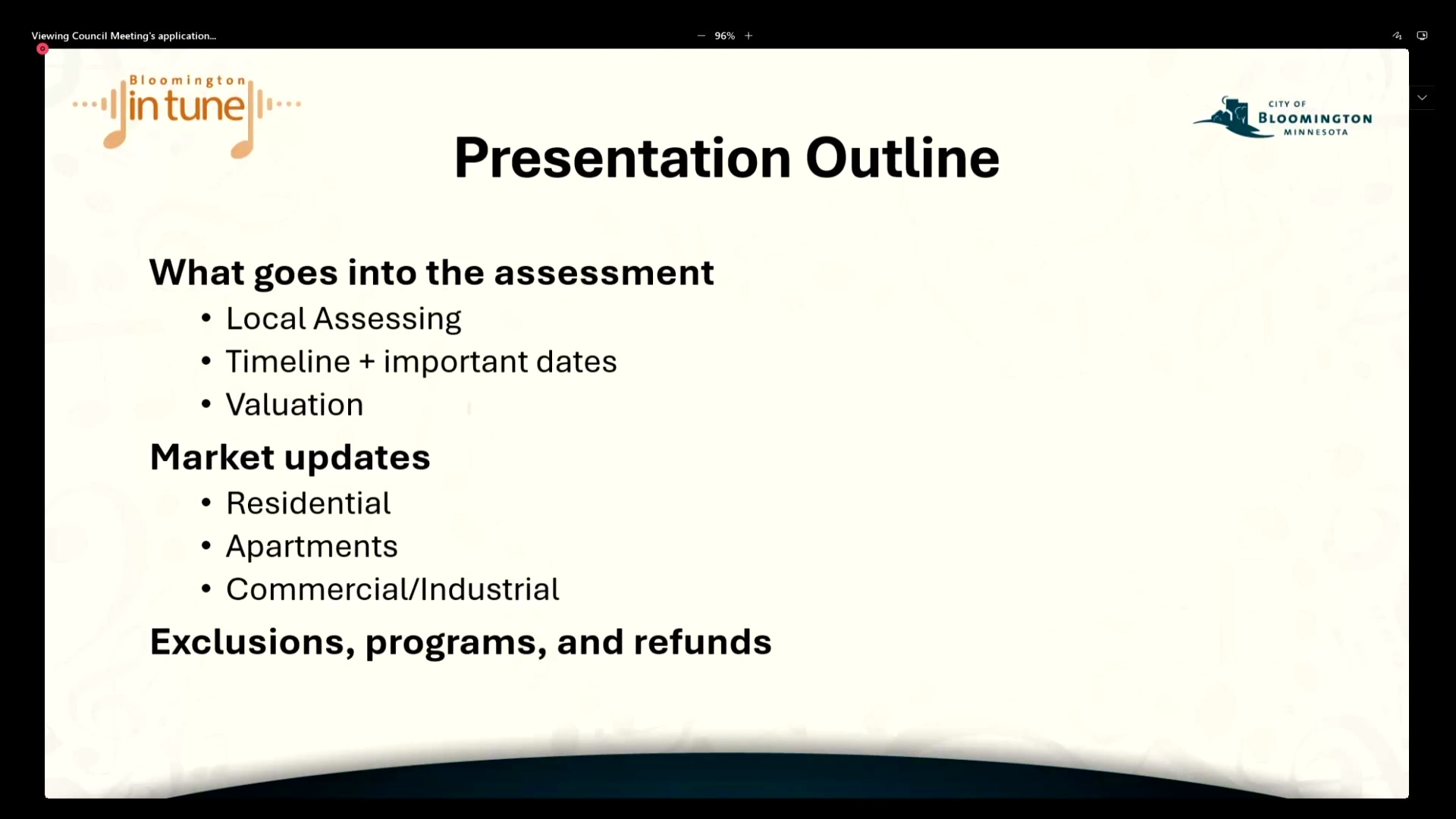
City Assessor Tim Bolger's 2026 assessment report showed the median single-family home value rose to $376,000 (+2.9%), while condo values fell 4.2% due to rising HOA and insurance costs; industrial property values dropped 2.1%, the first decline in four-to-five years, attributed to a glut of new industrial supply. Combined commercial/industrial/apartment values were flat while residential values rose, meaning a slight property tax shift onto homeowners this year. The Local Board of Appeal reviewed about 200 resident calls and adjusted roughly 60 values; the report also highlighted underused programs like the homestead market value exclusion and senior tax deferral that residents can use to reduce their tax burden.